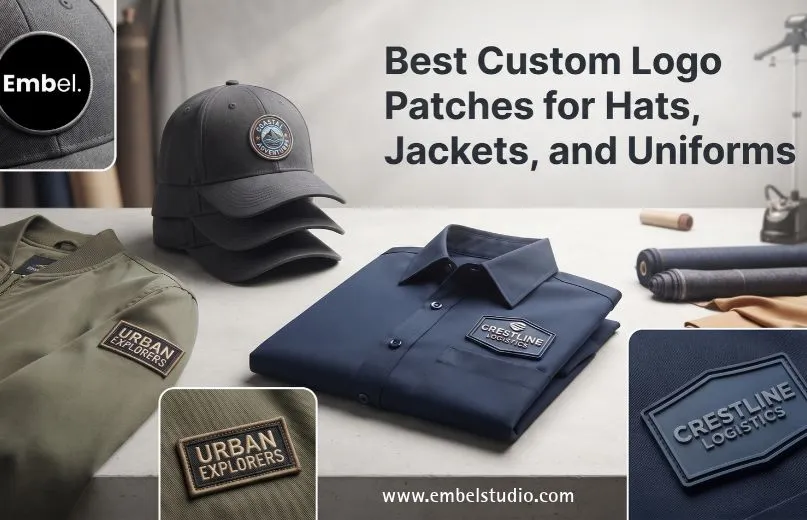
Best Custom Logo Patches for Hats, Jackets, and Uniforms
Your logo shows up on a lot of things: a business card, a website, a storefront sign. A patch is different because people wear it. It sits on a cap at a Texas job site, a jacket at a Chicago food truck, or a uniform on a busy shift in a Florida restaurant. It gets seen again and again, which is why custom logo patches have become one of the most reliable ways for American businesses, teams, and clubs to look put together.
This guide covers which patch types suit hats, jackets, and uniforms, how to choose materials and backings, and how to order without headaches. We’ll also look at what Embel Studio patches offers if you’re ready to start.
What Are Custom Logo Patches?
Custom logo patches are fabric or material emblems made to your design and attached to clothing or accessories. You can sew them on, iron them on, or attach them with a hook-and-loop backing. They turn plain apparel into branded apparel, and they hold up far longer than printed designs that crack and fade after a few washes.
Across the USA, people use them for company uniforms, high school and college teams, motorcycle clubs, police and security crews, restaurants, trade businesses, and promotional merch. The logic is the same everywhere: a patch is durable, looks professional, and carries your identity in a small space.
Why Patches Beat Printing for Many Brands
Screen printing and heat transfers are fine for T-shirts, but they struggle on thick or structured items like caps and canvas work jackets. Patches are made separately and then attached, so quality doesn’t depend on the garment’s surface. They also add texture and dimension that flat prints can’t match.
Best Custom Patches for Hats
Hats are the most popular place for logo patches. A cap front is a small, high-visibility space, and patches are made to fill it. From baseball caps in New York to trucker hats in Nashville, a patch gives a hat a finished, branded look.
Embroidered Patches for Caps
Embroidered patches are the all-rounder. Thread stitched in dense layers gives a clean, raised look that reads well from across a parking lot. They suit detailed logos with multiple colors, and they handle sun, sweat, and washing without trouble.
Best Size for a Hat Patch
For a standard six-panel cap, a patch around 2 to 3 inches wide fits the front comfortably. Go bigger and the patch can pucker on the curve of the crown. If your logo has fine lettering, keep the design simple enough that the text stays readable at that size.
Leather and Faux Leather Patches
Leather patches have a premium, rugged feel that suits outdoor brands, coffee roasters, barbershops, breweries, and craft companies. They’re usually debossed or laser-engraved rather than stitched, which gives a subtle, understated look. Very thin lines can get lost in leather, so bold, simple logos work best.
Woven Patches for Fine Detail
If your logo has tiny text or intricate shapes, woven patches are worth a look. The threads are much finer than in embroidery, which means sharper detail and a flatter finish. They’re a smart pick for lightweight caps and brands with complex artwork.
Chenille Patches for Retro Style
Chenille has a fuzzy, textured look that most Americans connect with varsity jackets. On hats, it gives a bold, nostalgic style that stands out. It’s best for one or two large letters or simple shapes rather than detailed logos.
Best Custom Patches for Jackets
Jackets give you more room, which means you can get more creative with size, shape, and placement.
Large Back Patches for Impact
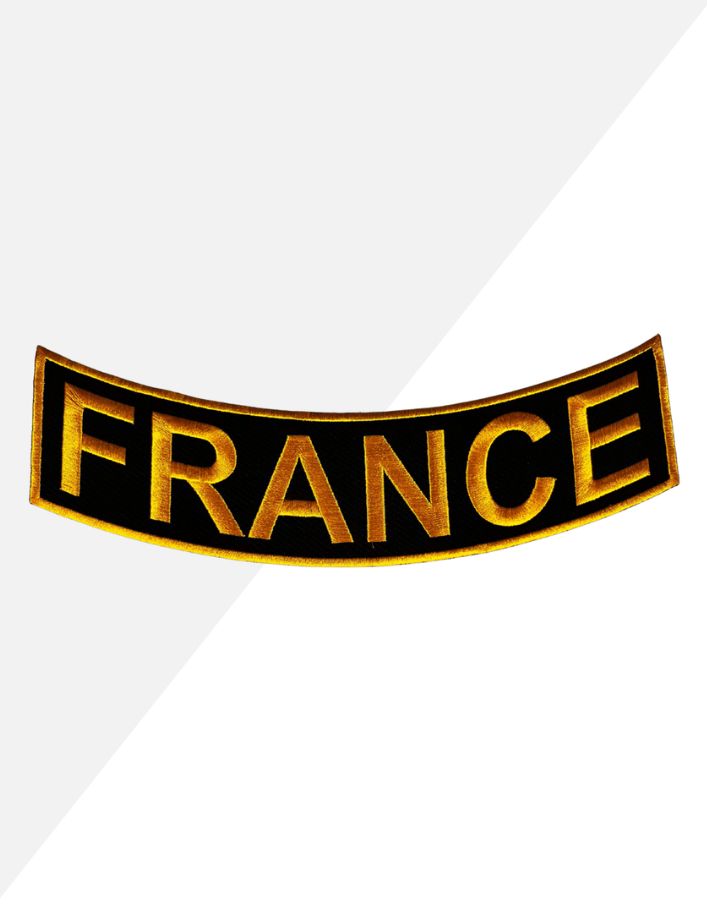
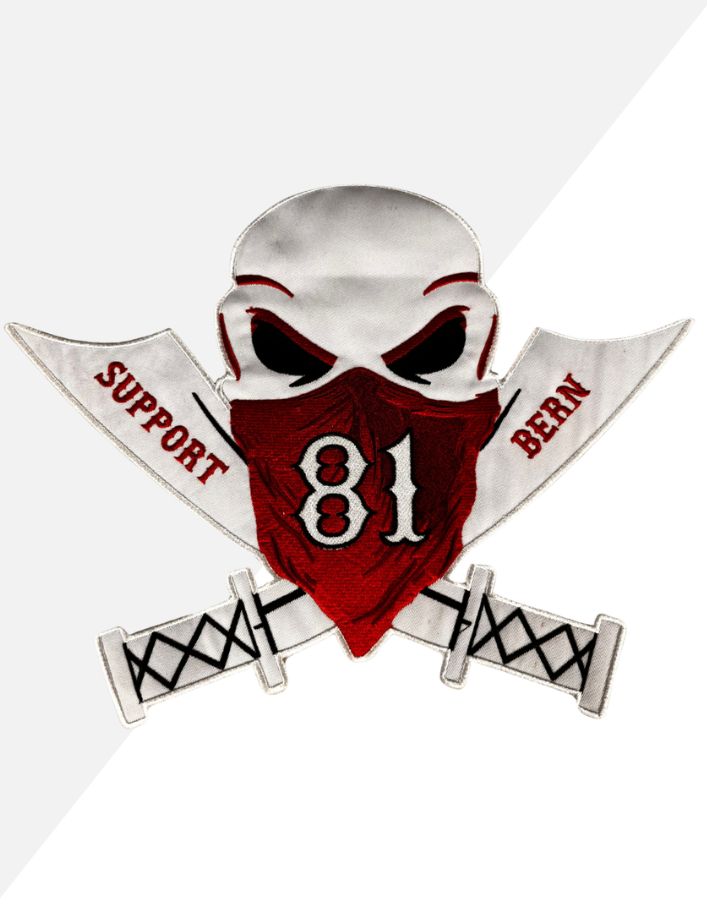
Back patches are the statement piece. Motorcycle clubs, sports teams, and outdoor groups use them to show membership. These usually run 10 to 12 inches wide, so the design can include real detail and layered color. Embroidered back patches are the standard choice because they stay crisp at that scale.
Chest and Sleeve Patches for Everyday Branding
For work jackets, windbreakers, and fleece, a 3 to 4 inch chest patch is the sweet spot. Sleeve patches, usually smaller, work well for secondary logos, team numbers, or role titles. Pairing a chest logo with a sleeve patch gives a jacket a finished, intentional look.
PVC Patches for Weather-Ready Gear
PVC (rubber) patches are waterproof, flexible, and easy to wipe clean. They’re a great match for rain jackets, tactical gear, and outdoor work wear, especially in rainy regions like the Pacific Northwest or humid states along the Gulf Coast. The 3D molded surface also gives logos a modern, bold look that fabric can’t copy.
When to Pick PVC Over Embroidery
Choose PVC when the jacket will see rain, mud, or heavy cleaning. Choose embroidery when you want a classic textile look and a softer feel. Both last, but they suit different jobs.
Best Custom Patches for Uniforms
Uniform patches have a different job. They need to look sharp, survive hundreds of washes, and be easy to attach in bulk.
Embroidered Patches for Professional Uniforms
Healthcare teams, security staff, delivery drivers, restaurant crews, landscaping companies, and school staff all rely on embroidered patches. The stitching is tough, the colors stay true, and the finish looks professional. For uniforms, we recommend keeping the design clean and using a merrowed (overlocked) border, which prevents fraying at the edges.
Name Patches and Role Patches
Many uniform programs add small name tags or title patches alongside the main logo. This makes teams easier to identify and gives customers a friendlier experience. Keep these simple, with high-contrast thread so the text is easy to read at a glance.
Hook-and-Loop Patches for Flexible Uniforms
Need to swap patches between jackets, update ranks, or change designs seasonally? Hook-and-loop backing lets you attach and remove patches without sewing. It’s popular for tactical, security, and team-based uniforms.
How to Choose the Right Backing
The backing decides how the patch attaches and how long it stays there. Picking the wrong one is one of the most common mistakes buyers make.
Iron-On Backing
Iron-on patches have a heat-activated adhesive on the back. They’re quick and beginner-friendly, and they work well on cotton and cotton blends. For heavy use, such as uniforms washed every week, add a few stitches around the edge for extra security.
Sew-On Backing
Sewing is the most permanent option. It’s the best choice for work uniforms, jackets, and anything that takes a beating. If you want the patch to outlast the garment, sew it on.
Hook-and-Loop and Adhesive Backing
Hook-and-loop is great for removable patches, and peel-and-stick adhesive suits temporary use such as events. Neither is meant for long-term wear on items that get washed often.
How to Design a Logo Patch That Looks Great
A good patch design is simpler than most people expect. Thread isn’t ink, so what looks sharp on a screen may need adjusting to work in fabric.
Keep the Design Bold and Simple
Limit your colors, use thick lines, and avoid tiny text. As a rule of thumb, lettering shouldn’t be smaller than about a quarter inch tall. Fewer details almost always means a cleaner patch.
Choose Colors That Contrast
Pick thread colors that stand out against both the patch background and the garment. A navy patch on a navy jacket will disappear. A thin border in a contrasting shade is an easy fix.
Send Vector Artwork If You Can
Files like AI, EPS, or SVG give the cleanest results. If you only have a JPG or PNG, a good patch maker can still recreate your logo, but vector files save time and reduce errors.
How to Order Custom Logo Patches in the USA
Ordering is easier than most people think. Here’s the typical path.
- Send your logo. Share your artwork and a few details about the garment.
- Choose the type and size. Pick embroidered, woven, PVC, leather, or chenille, plus the dimensions in inches.
- Select the backing. Iron-on, sew-on, or hook-and-loop.
- Approve the proof. Check colors, spelling, and layout before production.
- Receive your patches. Production and delivery follow once you approve.
Quantities and Turnaround
Needs vary. A small business in Los Angeles might want 50 patches for new uniforms, while a school district or event organizer might need several hundred. Ask about minimums and turnaround upfront, especially if you’re working toward a deadline like a season opener or a trade show.
Why Choose Embel Studio Patches
If you want a custom patch maker that understands what U.S. businesses, teams, and creators need, Embel Studio patches is worth a look. Here’s what stands out:
- Wide range of patch types. Embroidered, woven, PVC, leather, and chenille options let you match the patch to the product.
- Custom designs, any shape. Your logo isn’t forced into a template. Shapes, sizes, borders, and backings are tailored to your needs.
- Quality that holds up. Patches are built for real wear on hats, jackets, and uniforms.
- Help with artwork. If your logo isn’t patch-ready, the team can guide you toward a design that stitches cleanly.
- Suited for small and large orders. Whether you’re outfitting a local crew or launching a brand nationwide, you can order what you need.
It’s a practical choice for anyone who wants branded apparel that looks professional without a complicated process.
Care Tips to Keep Your Patches Looking New
A little care goes a long way.
Washing and Drying
Turn garments inside out, use cold water, and skip harsh bleach. Air drying is best, especially for iron-on patches, since high dryer heat can loosen adhesive over time.
Ironing and Storage
If you need to iron, place a cloth over the patch first. For leather patches, avoid soaking and keep them away from direct heat.
Frequently Asked Questions
What is the best patch type for hats?
Embroidered patches are the most popular choice because they’re durable and show detail well. Leather and woven patches are strong alternatives depending on your style.
How big should a logo patch be for a jacket?
Chest patches typically measure 3 to 4 inches wide, while back patches range from 10 to 12 inches. Sleeve patches are usually around 2 to 3 inches.
Are iron-on patches durable enough for uniforms?
They can be, but sewing along the edges makes them far more secure for garments that are washed often. For heavy daily use, sew-on is the safer bet.
Can I get custom logo patches in small quantities?
Yes, many patch makers offer smaller runs. Check minimums with your supplier before placing an order.
What file format is best for a patch design?
Vector files such as AI, EPS, or SVG are ideal, though a clear PNG or JPG can often be converted.
How long do custom logo patches last?
With proper care, quality embroidered and PVC patches can last for years, often as long as the garment itself.
Final Thoughts
The best custom logo patch depends on where it’s going. Embroidered patches are the dependable all-rounder for hats and uniforms, leather brings a premium feel to caps, PVC handles tough weather on jackets, and chenille adds retro character. Match the patch type to the garment, pick the right backing, keep the design bold, and your logo will look sharp for a long time.
Ready to get started? Explore custom options at Embel Studio patches and turn your logo into something people actually want to wear.




Leave a Comment