
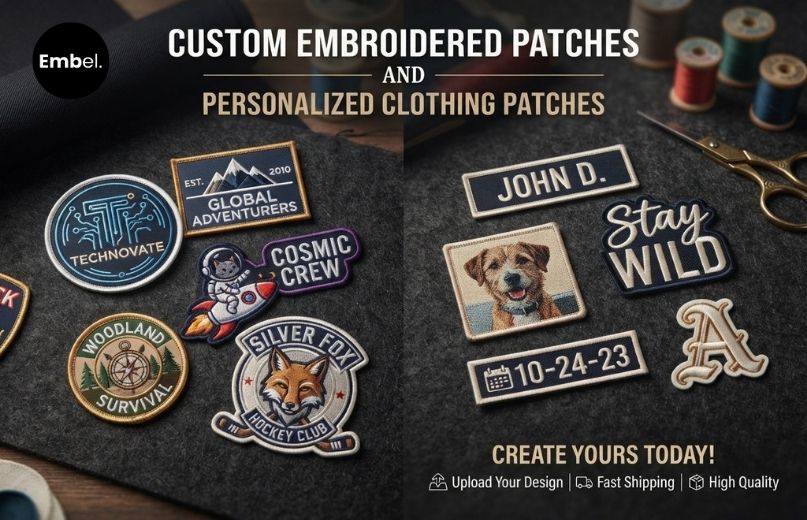
Custom Embroidered Patches and Personalized Clothing Patches
From varsity jackets and biker vests to corporate uniforms and small-business merch, embroidered patches have made a serious comeback across the USA. They’re durable, endlessly customizable, and give plain clothing a distinctive, personal touch without the cost of full custom apparel production. This guide covers everything you need to know about custom embroidered patches — how they’re made, where they’re used, and how to choose a manufacturer that delivers quality results.
Why Custom Embroidered Patches Are Popular Again
Embroidered patches have moved well beyond military and scouting uniforms. Today they show up on streetwear, denim jackets, sports team gear, and branded merchandise, driven by a broader trend toward personalization and DIY-style customization.
A Shift Toward Personalized Fashion
Consumers increasingly want clothing that reflects individual identity rather than mass-produced designs, and patches offer an easy, affordable way to personalize existing garments without altering the core piece.
Durability Compared to Printed Designs
Unlike heat-transfer prints or vinyl designs that crack and fade after repeated washing, embroidered patches hold their shape, color, and texture for years, making them a longer-lasting branding or decoration option.
How Custom Embroidered Patches Are Made
The Digitizing Process
Before any stitching begins, a design must be converted into a digital embroidery file that tells the machine exactly where to place each stitch, what direction to sew in, and which thread colors to use.
Stitch Density and Detail Mapping
Digitizing software maps out stitch density based on the complexity of the design, ensuring fine details like small text or thin outlines remain legible once embroidered.
Color Separation
Each color in a design is separated into its own stitching layer, allowing multi-colored patches to be produced with the same precision as single-color designs.
Backing and Border Options
Common Backing Types
Patches can be finished with iron-on adhesive backing, sew-on backing, Velcro-hook backing, or adhesive peel-and-stick backing, depending on how the patch will be attached.
Border Finishing Styles
Merrowed borders (a rolled, stitched edge) remain the most popular finishing style for durability, while heat-cut borders offer a cleaner look for patches with more intricate shapes.
Embroidery Machine Production
Once digitized, designs are loaded onto multi-needle embroidery machines capable of stitching dozens of patches simultaneously, allowing both small custom orders and large bulk runs to be produced efficiently.
Popular Uses for Custom Embroidered Patches in the USA
Business Branding and Uniforms
Companies use embroidered patches on staff uniforms, work jackets, and caps as a durable, professional branding option that holds up better than printed logos under regular wear and washing.
Sports Teams and Clubs
From Little League teams to adult recreational leagues, embroidered patches remain a standard way to display team logos, achievements, and sponsor names on jerseys and jackets.
Motorcycle Clubs and Biker Vests
Custom patches continue to hold cultural significance within motorcycle communities, often representing club affiliation, achievements, or personal identity on leather vests.
Fashion and Streetwear Customization
DIY Denim and Jacket Customization
A growing number of consumers buy standalone patches to personalize denim jackets, backpacks, and hats, creating one-of-a-kind pieces from otherwise plain garments.
Spotlight: Embel Studio Patches
Among the companies serving this growing demand is Embel Studio Patches, a USA-based provider specializing in custom embroidered and personalized clothing patches for individuals, small businesses, and organizations. They offer design flexibility across sizes, thread colors, and backing types, making them a practical option whether you’re ordering a single custom patch for a personal project or a bulk batch for a business or team. Working with a dedicated patch specialist like Embel Studio Patches, rather than a general print shop, often results in more consistent stitch quality and finishing across larger orders.
Event and Commemorative Patches
Patches are also widely used for one-off events, milestone celebrations, and commemorative merchandise, offering a keepsake-style item that outlasts printed alternatives.
How to Choose the Right Custom Patch Provider
Evaluate Sample Work and Portfolio
Before placing a bulk order, review a provider’s past work to assess stitch consistency, color accuracy, and how well they handle fine detail in complex designs.
Compare Thread and Backing Quality
Thread Material Options
Polyester thread is generally more colorfast and durable for repeated washing compared to standard cotton thread, making it a better choice for patches applied to frequently worn garments.
Backing Suitability for Your Use Case
Choose backing type based on application — iron-on works well for lightweight fabric customization, while sew-on or Velcro backing suits heavier-duty garments like jackets and bags that see frequent wear.
Minimum Order Quantities and Pricing Tiers
Many providers offer lower per-unit pricing at higher order volumes, so it’s worth checking minimum order requirements and bulk discount tiers if you’re ordering for a team, event, or business.
Turnaround Time and Rush Options
Confirm standard production timelines upfront, and ask whether rush production is available if you’re working against a specific event date or launch deadline.
Comparing Patch Types and Applications
| Patch Type | Best For | Typical Backing | Durability |
|---|---|---|---|
| Merrowed Border Embroidered | Uniforms, team jerseys | Sew-on/Iron-on | Very High |
| Heat-Cut Border Embroidered | Detailed logos, fashion patches | Iron-on/Adhesive | High |
| PVC/Rubber Patches | Outdoor gear, tactical apparel | Velcro/Sew-on | Very High |
| Chenille Patches | Varsity jackets, letterman style | Sew-on | High |
Design Tips for Ordering Custom Patches
Keep Text Legible at Small Sizes
Fine text or overly detailed line work can lose clarity once digitized and stitched, so simplifying text and key design elements improves the final result, especially on smaller patches.
Choose High-Contrast Color Combinations
Bold, contrasting thread colors reproduce more accurately in embroidery than subtle gradients or closely matched tones, which don’t translate well to stitched designs.
Consider Patch Size Relative to Garment Placement
A patch designed for a jacket back panel needs significantly more size and detail tolerance than one meant for a small cap or sleeve placement, so factor final placement into your design decisions early.
Frequently Asked Questions
How long does it take to produce custom embroidered patches?
Standard production typically takes one to two weeks depending on order size and design complexity, though many providers, including specialized shops like Embel Studio Patches, offer rush options for tighter deadlines.
What’s the difference between iron-on and sew-on patches?
Iron-on patches use heat-activated adhesive backing suited for lighter fabrics, while sew-on patches require stitching them directly onto the garment, offering stronger long-term durability for heavier-use items.
Can custom patches include multiple colors and fine details?
Yes, modern digitizing and multi-needle embroidery machines can handle multiple colors and reasonably fine detail, though very small text or intricate line work may need slight simplification for best results.
Is there a minimum order quantity for custom embroidered patches?
Minimums vary by provider — some accommodate single custom patches for personal use, while others set minimum quantities for bulk business or team orders to keep per-unit pricing efficient.
Final Thoughts
Custom embroidered patches remain one of the most durable and versatile ways to personalize clothing, brand a business, or represent a team or organization across the USA. Whether you need a single custom design for a personal project or a bulk order for uniforms and merchandise, providers like Embel Studio Patches offer the design flexibility and production quality needed to get consistent, long-lasting results. Before placing an order, review sample work, confirm thread and backing options suited to your use case, and clarify turnaround times — these details make the difference between a patch that looks great for years and one that fades or frays after a few washes.






Leave a Comment